

By Thanasis Petras
International Correspondent | Chief Editor & Publisher — Diethni.gr
Europe is likely to maintain sufficient energy supplies through 2030, but securing those supplies at competitive prices will remain a considerably greater challenge. Despite substantial progress in reducing dependence on Russian fossil fuels, the continent remains exposed to geopolitical disruptions, international competition for liquefied natural gas (LNG), and the economic consequences of higher energy costs. The period between 2026 and 2027 presents the greatest immediate vulnerability, as the European Union’s withdrawal from Russian gas coincides with instability in the Middle East and uncertainty surrounding global energy flows.
This assessment carries moderate confidence. It assumes continued access to alternative suppliers, operational cross-border infrastructure and sustained investment in renewable electricity generation. By the end of the decade, Europe should possess a more diversified and resilient energy system. However, greater energy independence will not necessarily translate into lower prices or a recovery in industrial competitiveness.
The historical foundations of Europe’s energy dependence
Europe’s energy vulnerabilities are rooted in economic relationships that developed over several decades. In 1970, West Germany concluded a major pipes-for-gas agreement with the Soviet Union, helping establish an energy relationship that would subsequently expand across the continent. Soviet-era pipelines, followed by Russian infrastructure projects, gradually embedded imported fossil fuels in Europe’s industrial economy.
The Druzhba pipeline supplied crude oil to European markets, while later infrastructure, including Nord Stream and TurkStream, strengthened Russia’s position as a major natural gas supplier. These arrangements delivered commercial advantages through relatively inexpensive energy and predictable long-term supplies. However, they also created structural dependencies that proved difficult to reverse when political relations deteriorated.
Germany provides perhaps the clearest illustration of how energy dependence became intertwined with a broader economic model. Competitive industrial energy costs supported manufacturers in sectors such as chemicals, machinery and automotive production, while growing Chinese demand provided opportunities for German exporters. This relationship contributed to a later phase of Germany’s export-led development rather than the original postwar economic miracle.
Over time, however, China evolved from a rapidly expanding customer into an increasingly capable industrial competitor. Germany’s Bundesbank has identified losses in German export market share in sectors where Chinese producers have gained ground. Nevertheless, China remained Germany’s largest trading partner by combined trade in 2025, while the United States was its leading export destination.
Germany therefore faces a challenge extending beyond the replacement of Russian gas. Higher energy costs have coincided with stronger international competition, making technological innovation, productivity improvements and market diversification increasingly important. India and Southeast Asia offer potential export opportunities, but they cannot automatically replace established commercial relationships.
The broader European challenge is consequently not simply to reduce fossil fuel imports, but to preserve industrial capacity throughout that transition. Falling gas consumption resulting from factory closures may improve energy-import statistics without producing any corresponding improvement in economic competitiveness.
From Russian dependence to global energy-market exposure
The COVID-19 pandemic disrupted international supply chains, while Russia’s full-scale invasion of Ukraine in 2022 accelerated Europe’s efforts to diversify its energy supplies. Increased LNG imports, alternative pipeline deliveries, reduced consumption and favourable weather conditions helped the continent avoid widespread shortages.
The adjustment nevertheless came at a substantial economic cost. Bundesbank assessments of Germany’s energy shock have documented the sharp rise in natural gas prices and the contribution of relatively mild winter conditions to subsequently easing market pressure. Europe’s experience demonstrated considerable adaptability, but that success should not be confused with a painless transition.
The European Commission estimates that Russia’s share of EU natural gas imports declined from approximately 45% in 2021 to 12% in 2025. Under the EU’s adopted phase-out framework, Russian LNG imports are scheduled to end by the close of 2026, while the prohibition on Russian pipeline gas will be completed no later than November 2027.
The United States has emerged as a central beneficiary of this restructuring. According to European Commission figures, American supplies accounted for approximately 58% of EU LNG imports in 2025, equivalent to roughly one-quarter of total EU natural gas demand.
This development has strengthened transatlantic energy cooperation and reduced Europe’s exposure to Russian-controlled supply routes. Yet replacing concentrated dependence on Russian pipelines with greater reliance on internationally traded LNG introduces a different set of vulnerabilities.
Unlike pipeline gas delivered through established bilateral arrangements, LNG is traded in a global market where European buyers compete with Asian consumers. Consequently, geopolitical developments thousands of kilometres from Europe can produce significant increases in European energy prices even when the continent’s direct suppliers continue operating normally.
The Strait of Hormuz and the economic cost of geopolitical disruption
The conflict in the Middle East and the disruption of energy shipments through the Strait of Hormuz have exposed the limitations of Europe’s diversification strategy.
According to the International Energy Agency’s July 2026 gas market assessment, recovery in energy flows through the strait remained incomplete following disruptions to a maritime corridor that had previously carried almost 20% of global LNG supplies.
The IEA’s September oil market assessment also identified constraints on Gulf exports and substantial pressure on international refined-product markets.
The consequences extend well beyond the immediate availability of crude oil and natural gas. Disruptions in Gulf production or shipping increase competition for alternative cargoes, raise transportation and insurance costs, and create additional pressure on diesel and aviation fuel supplies.
For Europe, the transmission mechanism is primarily economic. Asian buyers seeking replacement LNG cargoes can bid up prices in international markets, forcing European importers to pay more to attract supplies. Refining disruptions and constrained oil shipments can similarly increase transportation and industrial costs.
The financial consequences were highlighted by European Commission President Ursula von der Leyen during a European Parliament debate in Strasbourg on 6 October 2026, ahead of the European Council meeting scheduled for 15–16 October.
Referring to the Middle East conflict and the disruption of energy supplies through the Strait of Hormuz since late February, von der Leyen stated that imported fossil fuels had cost Europe an additional €100 billion without delivering any additional energy.
Her assessment illustrates a central weakness in Europe’s current energy position: the continent may retain access to sufficient supplies while paying substantially more for them.
Those additional expenditures reduce household purchasing power, increase operating costs for businesses and redirect financial resources that could otherwise support investment, infrastructure development and economic growth.
The strategic question is therefore no longer confined to whether Europe can obtain enough energy. It increasingly concerns whether European industry can afford the energy required to remain internationally competitive.
European gas storage and the risks of winter 2026–2027
Europe enters the approaching heating season with substantial natural gas reserves, although storage levels vary considerably between member states.
According to data published by Gas Infrastructure Europe on 12 October 2026, underground gas storage facilities across the European Union were approximately 73.75% full, containing 833.43 terawatt-hours of natural gas.
National differences were significant. Germany’s facilities stood at approximately 60% capacity, compared with around 89% in Italy and 99% in Poland.
These figures do not independently establish the likelihood of national shortages. Storage requirements depend on consumption patterns, import infrastructure, industrial demand and the capacity of interconnected European gas networks. Nevertheless, the differences demonstrate that member states enter the winter with uneven levels of protection against potential disruption.
The European Commission reported on 8 October that an assessment by the European Network of Transmission System Operators for Gas, known as ENTSOG, considered Europe’s gas system sufficiently flexible to meet winter demand under the conditions examined.
This supports the central assessment that Europe faces a greater probability of expensive supplies than widespread physical shortages.
However, several developments could materially worsen the outlook. A prolonged period of unusually cold weather would accelerate withdrawals from storage. Continued disruption in the Gulf would intensify competition for LNG cargoes, while an unexpected outage involving a major alternative supplier or critical European infrastructure could place additional pressure on available supplies.
Germany’s energy-intensive industries, particularly chemicals, metals and manufacturing, would remain vulnerable to sustained price increases. Agriculture, aviation and freight transportation would also face higher costs through their exposure to refined petroleum products.
Landlocked European economies could experience additional pressure if congestion or technical problems restrict access to imports arriving at coastal terminals.
Under these circumstances, the first visible economic effects would likely include higher wholesale prices, reductions in industrial energy consumption and renewed demands for government intervention. Widespread shortages would represent a more severe scenario rather than the most probable outcome.
Infrastructure expansion and Europe’s policy response
European governments have responded to these vulnerabilities by expanding LNG import capacity, diversifying supply routes and strengthening energy-market frameworks.
Several infrastructure projects are expected to improve flexibility during the second half of the decade.
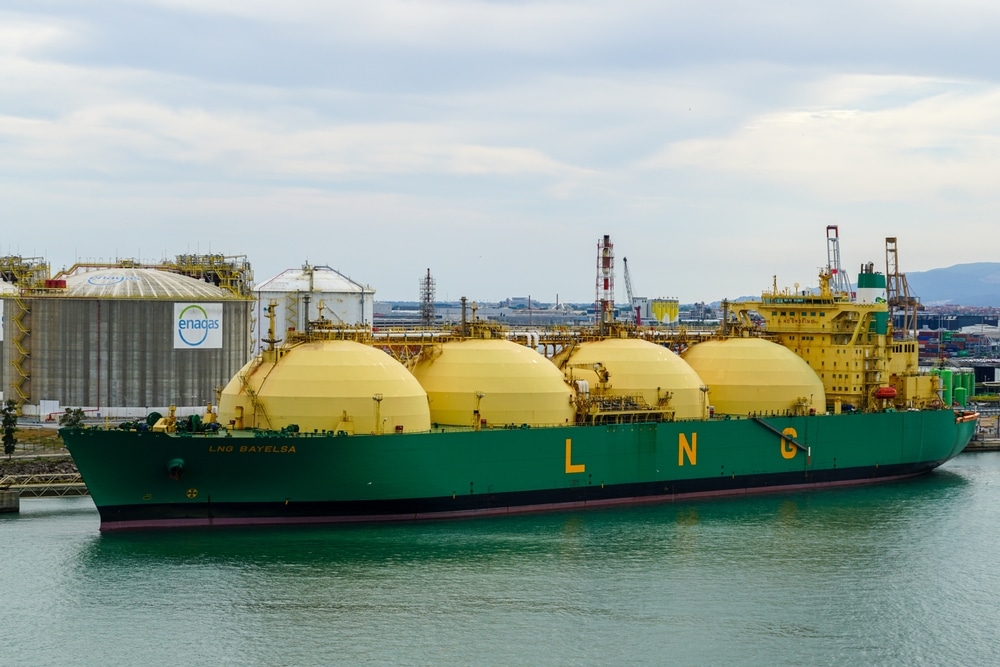
Germany’s Stade land-based LNG terminal is scheduled to become operational in 2027, with planned annual capacity of approximately 13.3 billion cubic metres. The Brunsbüttel project also targets 2027, while Poland’s Gdańsk floating LNG terminal is planned for 2028, adding approximately 6.1 billion cubic metres of annual import capacity.
In Southern Europe, Italy’s Ravenna LNG terminal entered operation in May 2025. Greece’s Alexandroupolis terminal began commercial operations in October 2024, contributing to efforts to diversify supply access in Southeast Europe.
These facilities could accommodate additional LNG from the United States and other international producers while reducing dependence on individual pipeline corridors.
Their strategic value, however, depends on more than their nominal import capacity. Effective operations, adequate inland transmission networks, commercially competitive cargoes and reliable cross-border interconnections are all necessary to translate infrastructure investment into meaningful energy security.
Additional regasification capacity cannot guarantee lower prices if international LNG supplies remain constrained.
At the policy level, the European Union has developed several mechanisms intended to address immediate supply vulnerabilities and reduce structural dependence on imported fossil fuels.
The REPowerEU framework promotes diversification, energy efficiency, renewable energy deployment and reduced reliance on Russian energy. European gas storage regulations establish filling obligations while allowing flexibility during periods of market pressure.
Emergency oil stockholding requirements provide another layer of protection. Under the EU framework, member states must maintain reserves equivalent to at least 90 days of net imports or 61 days of consumption, whichever is higher.
These reserves can mitigate temporary disruptions but cannot permanently replace lost international production.
Meanwhile, the European Commission’s Affordable Energy Action Plan and reforms to the electricity market seek to improve long-term affordability through investment in electricity networks, more efficient permitting procedures and greater use of long-term electricity supply contracts.
Together, these measures indicate a gradual transition from emergency crisis management towards a broader strategy combining energy security, industrial competitiveness and decarbonisation.
Their effectiveness will ultimately depend on implementation, financing and the ability of member states to coordinate infrastructure development across national borders.
Europe’s energy mix towards 2030
By 2030, Europe’s energy system is likely to be considerably cleaner and more diversified, although fossil fuels will continue to play an important role in the wider economy.
The European Union has established a binding target for renewable energy to account for at least 42.5% of gross final energy consumption by 2030, with an ambition to reach 45%.
The European Commission’s assessment of national energy and climate plans indicated that existing national commitments could deliver approximately 41%, while a more favourable projection reached around 42.6%.
Based on these assessments, a reasonable central analytical range is approximately 40–43% renewable energy in gross final consumption by 2030, provided planned investments and regulatory measures are implemented broadly as expected.
This range represents an analytical judgment derived from published national plans rather than a separate official forecast.
The transformation should be more pronounced in electricity generation.
According to International Energy Agency projections, renewable sources could provide approximately 63% of EU electricity generation by 2030. When nuclear energy is included, low-carbon electricity could account for around 84% of generation.
This would imply approximately 21% nuclear generation, with the remaining 16% supplied principally by fossil fuels.
An important distinction must be maintained between electricity generation and overall energy consumption. Even as European electricity becomes substantially cleaner, oil will continue to support transport and petrochemical production, while natural gas will remain relevant to industrial processes, heating and flexible electricity generation.
The pace at which electrification spreads into these sectors will therefore be decisive.
Grid expansion, electricity storage, efficient industrial equipment and reliable access to competitively priced electricity will determine whether growth in renewable generation produces corresponding reductions in fossil fuel dependence.
The energy transition may also create new strategic vulnerabilities through greater dependence on critical minerals, electrical equipment, digital infrastructure and internationally concentrated manufacturing supply chains.
Reducing dependence on imported hydrocarbons will not eliminate geopolitical exposure; it will partly change its character.
Three possible scenarios for 2030
The most probable outcome is a gradual improvement in Europe’s energy-security position during the second half of the decade, accompanied by continued uncertainty over prices.
Under this central scenario, additional non-Gulf LNG capacity enters global markets, European renewable electricity generation expands and infrastructure investments improve access to alternative suppliers.
The years 2026 and 2027 nevertheless remain difficult because the withdrawal from Russian gas coincides with significant international market disruption.
The International Energy Agency has warned that damage to Qatar’s LNG facilities could postpone the expected easing of global supply conditions by at least two years. This risk complicates expectations of a rapid return to pre-crisis energy prices.
Confidence is therefore higher in Europe’s continued diversification than in the timing or magnitude of future price reductions.
A downside scenario would emerge if prolonged disruption in the Gulf coincided with unusually cold European winters, further damage to export infrastructure or unexpected outages involving major alternative suppliers.
Such developments would intensify international competition for LNG, accelerate storage withdrawals and increase pressure on energy-intensive industries.
Governments could respond through financial assistance, demand-management measures and the coordinated use of emergency mechanisms. However, prolonged intervention would place additional pressure on national budgets and potentially weaken investment in other economic priorities.
An upside scenario would require more rapid restoration of international shipping, recovery in disrupted Gulf production, timely completion of major LNG projects and faster deployment of electricity networks and renewable generation.
Under those conditions, market competition could improve, price volatility could ease and European industry could benefit from more predictable energy costs.
This would strengthen the competitiveness of electrified industrial production and reduce the economic burden associated with imported fossil fuels.
Investment opportunities and emerging strategic risks
Europe’s energy restructuring will also create opportunities for investors, infrastructure developers and governments seeking to strengthen their strategic positions.
Electricity transmission and distribution networks, energy storage, efficiency improvements and industrial electrification are likely to become increasingly important investment areas.
LNG terminals and associated pipeline connections offer additional security benefits, although their commercial outlook requires careful assessment. Infrastructure designed to protect against supply disruptions could face underutilisation if European gas demand declines more rapidly than anticipated.
Greece is particularly well positioned to benefit from the development of alternative energy corridors into Southeast Europe.
The Alexandroupolis LNG terminal and associated regional connections can improve access to international supplies for neighbouring markets, potentially strengthening Greece’s role as an energy transit and distribution hub.
Nevertheless, the commercial and strategic value of these routes depends on reliable terminal operations, competitive tariffs, adequate cross-border capacity and sustained regional demand.
At the same time, the expansion of electricity networks, LNG facilities and digital energy-management systems introduces additional security requirements.
Physical attacks, cyber incidents, equipment shortages and dependence on concentrated international supply chains could increasingly influence Europe’s energy resilience.
Energy security will therefore require not only diversified sources of supply but also stronger protection of the infrastructure responsible for delivering and managing those supplies.
Strategic outlook: what could change the forecast?
Europe’s energy outlook should be continuously reassessed against developments capable of altering the central scenario.
Faster-than-expected withdrawals from underground gas storage, prolonged delays in restoring Gulf exports, postponed LNG infrastructure projects or weaker renewable-energy integration would increase the risk of sustained price pressure.
Conversely, improving storage balances, recovering international production, more competitive LNG markets and faster electricity-network expansion would support a more favourable outlook.
European industrial demand also requires careful interpretation. Lower energy consumption resulting from efficiency improvements would indicate progress, while comparable reductions caused by factory closures or declining production would suggest economic deterioration.
This distinction is essential when evaluating the success of Europe’s transition.
The broader strategic challenge is to reduce dependence on politically vulnerable energy suppliers without undermining the industrial capacity necessary to sustain Europe’s economic strength.
By 2030, the European Union is likely to operate a more diversified, increasingly electrified and structurally resilient energy system than it possessed before the Russian invasion of Ukraine.
Whether that system also delivers competitive energy prices will depend on infrastructure development, international market conditions, regulatory execution and the pace of industrial adaptation.
Europe’s energy reset is therefore unlikely to eliminate geopolitical risk. Its principal achievement may instead be to improve the continent’s capacity to manage external shocks without allowing them to determine its economic future.